D-MICE Future Talent Development Marketing Training (Kyungpook National University, Daegu)
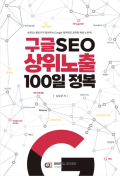
Hello, I’m Bo-kyung Kim from Marumbo Lab.
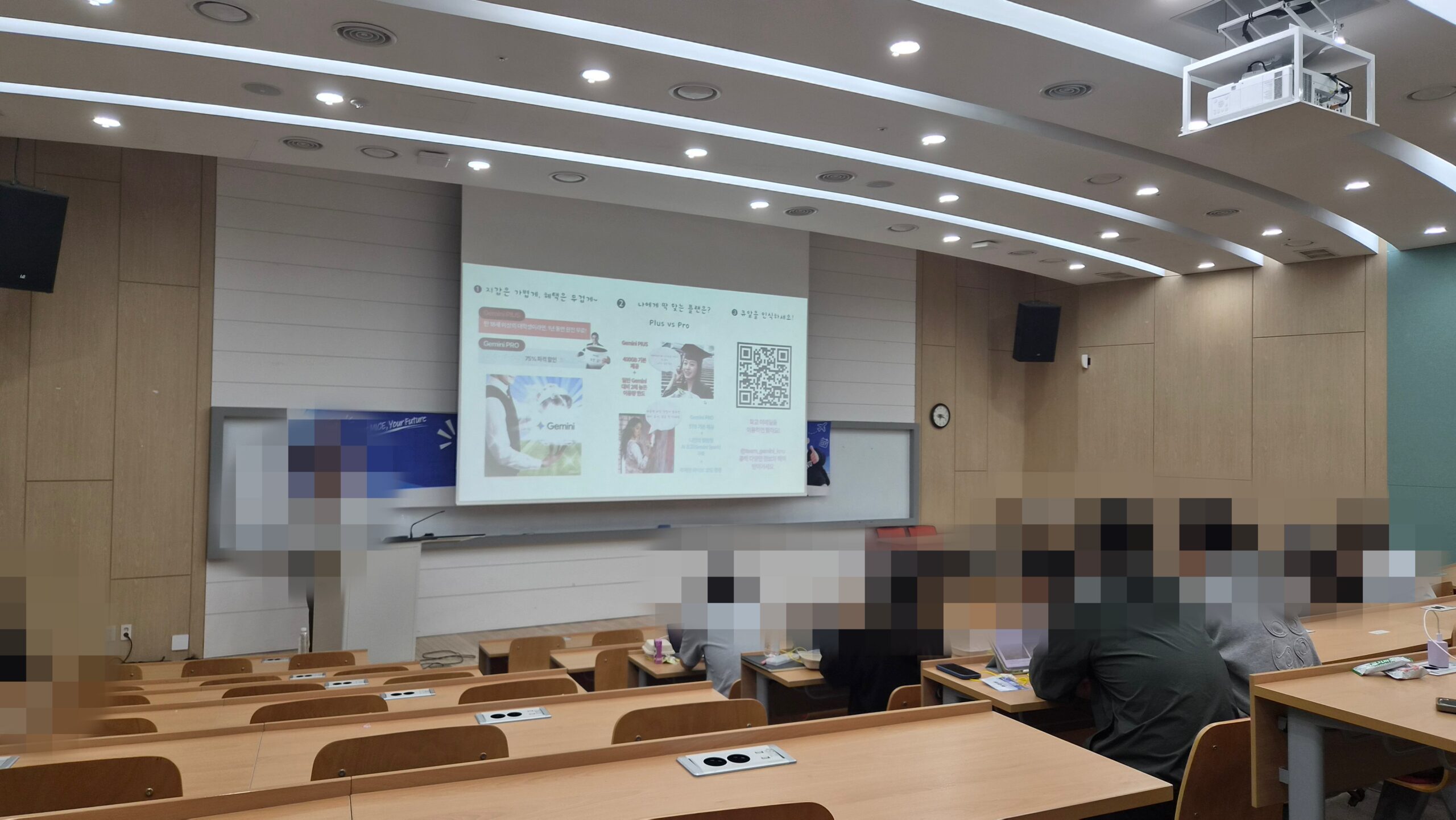
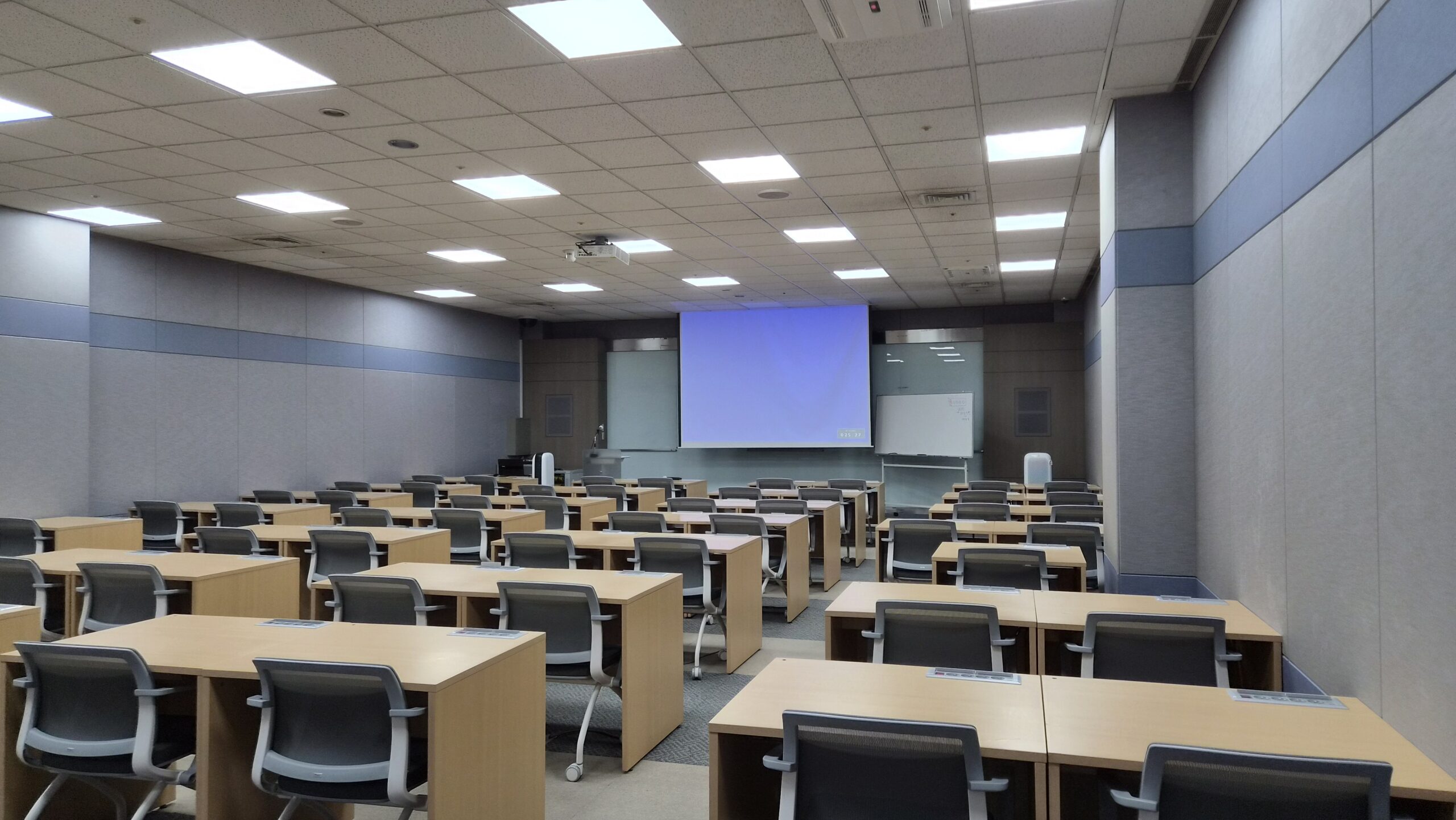
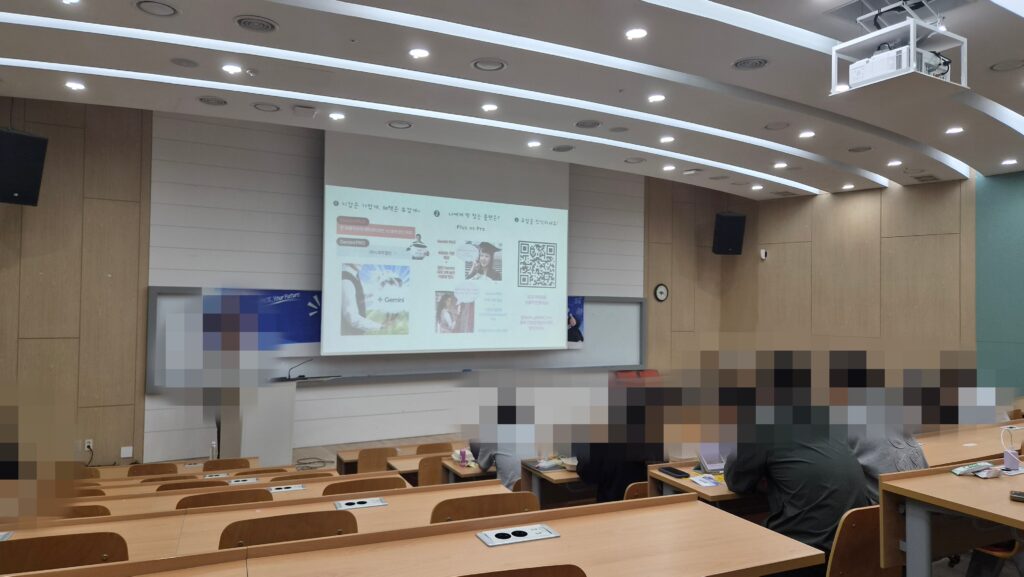
Recently, at Kyungpook National University, I delivered a special lecture on practical ways to use generative AI for university students preparing for jobs in the MICE industry.
This session ran for 60 minutes and focused on AI tools and real-world use cases students can apply both in job hunting and on the ground in the MICE industry.
When I prepare an AI lecture, there’s one thing I always prioritize.
“Will participants be able to use what they learned even the day after the lecture ends?”
I believe good AI training starts not with simply introducing new tools, but with showing what real problems they can solve in actual work.
Here’s what we covered in this Kyungpook National University special lecture for developing MICE talent.
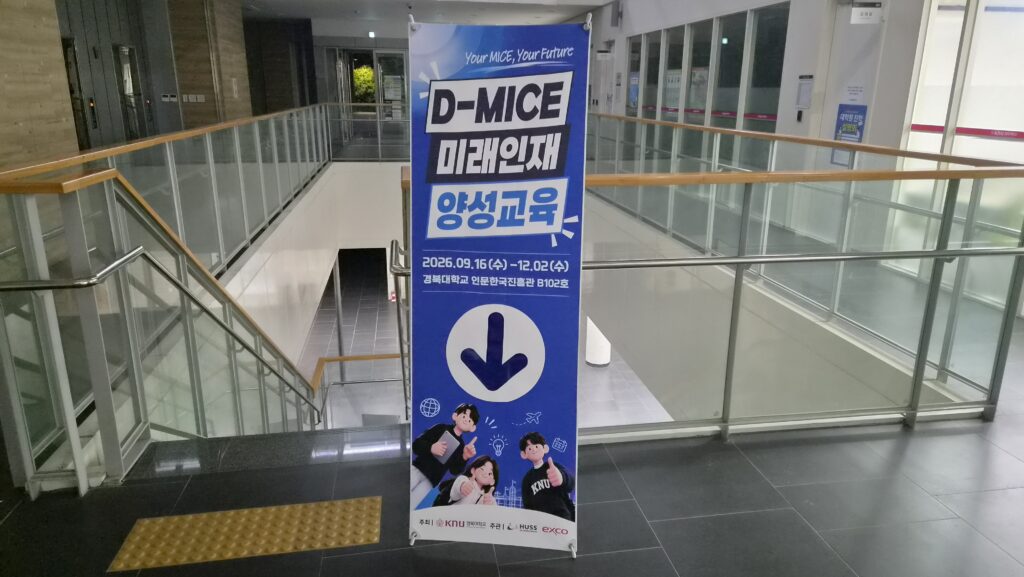
We designed the training around the practical AI skills needed in the MICE industry.
MICE refers to an industry encompassing Meetings, Incentives, Conventions, and Exhibitions.
In MICE, you need a wide range of practical skills beyond event planning—company and market research, competitor event analysis, promotional content production, schedule management, and more.
Before starting my business, I worked in conference-related roles for about seven years.
Based on that experience, in this training I explained how generative AI can streamline real MICE workflows.
Key Curriculum for the Kyungpook National University AI Special Lecture (Summary)
| Training topic | Tools used | How it’s used in practice |
|---|---|---|
| Company industry analysis | Naver Search Ads, AI | Search-volume analysis for companies and interview prep |
| Competitor event research | Meta Ads Library | Analyzing ad examples from events and organizations |
| Design production | Figma, generative AI | Creating and editing promotional images |
| Video/material summarization | NotebookLM, ChatGPT | Organizing key takeaways from talks and interviews |
| Promotional content planning | AI image generation | Creating a product detail page based on customer reviews |
| Workflow automation | Claude, Gemini | Creating presentation materials and managing schedules |
Rather than going deep into every tool within the limited 60 minutes, I focused the training on high-impact examples that are genuinely useful in real work.
1. How to prepare for job hunting using search-volume data and AI
The first example I introduced in this lecture was how to analyze a company using search-volume data.
Students preparing for employment often research a company’s business and recent news, but not many go as far as analyzing how market interest in that company is changing.
I explained search volume by comparing it to “foot traffic in the digital space.”
If search volume for a specific company spikes sharply, it’s worth checking what happened around that time.
I demonstrated how to review search-volume trends using the Naver Search Ads Keyword Tool, then use AI to investigate related news and company activities. This kind of analysis can help you understand a target company’s recent issues and present specific, well-grounded opinions in interviews.
2. How to use negative customer reviews for AI content planning
The second example was creating promotional content using customer reviews.
When many people use generative AI, they focus on prompts that produce good outputs.
But I emphasize that to create great content, you need to identify the customer’s problem before you worry about the prompt.
In this lecture, I used roasted sweet potatoes as an example product.
We collected pain points from reviews of competing products and used AI to categorize the main complaints.
For example, analyzing feedback such as the product being too small, quality being inconsistent, or the actual product not matching the photos.
Then I showed the process of summarizing product strengths that address those complaints and using them to create copy and an image plan for a product detail page.
This approach can also be used in the MICE industry.
By analyzing event participant reviews or satisfaction survey results, you can identify what to improve for the next event or reflect what participants value most in your promotional messaging.
3. From AI image generation to editing designs in Figma
When you create promotional images with AI, you may be happy with the overall result but still want to tweak just one specific part.
In this lecture, I introduced how to use AI image generation together with Figma.
If you want to change the overall design vibe, you can use an AI image generator to create a new concept draft.
On the other hand, if you need to adjust only certain elements—copy, colors, layout, and so on—using a design tool like Figma can be more efficient. To make it easy for students to grasp, I compared the two approaches to whether you dip the sauce or pour it over (the classic tangsuyuk debate).
Even complex technology becomes easier for first-time learners to understand when you connect it to familiar examples.
In AI training, I value explaining things in a way participants can actually remember and use rather than packing the session with difficult terminology.
4. A flexible AI special lecture tailored to participants’ devices and skill levels
In this Kyungpook National University session, many students were using tablets instead of laptops.
Because some AI tools are easier to use in a PC environment, I checked participants’ devices on site and adjusted how the session was run.
I guided them on how to check search data on tablets, and I demonstrated tasks that required a PC myself.
Also, so that students new to Figma or NotebookLM could follow along, I started by showing the final outputs first.
For AI special lectures at universities and public institutions, the right delivery approach varies depending on participants’ majors, age groups, and digital proficiency.
So rather than sticking rigidly to a fixed script, I adjust the examples and depth of explanation to fit the participants’ situation and the training objectives.
For university and public-institution AI special lectures, designing for the training goal matters
This Kyungpook National University MICE talent-development AI special lecture focused on company analysis, content creation, design workflows, and productivity improvements—skills job seekers need.
Even with the same generative AI training, the content should change depending on the audience.
For job seekers, company analysis and interview prep matter most; for working professionals, streamlining repetitive tasks and producing content may be the priority. For MICE professionals, the focus can be on event planning, participant analysis, and creating promotional content.
* If you’re interested in this training, please contact Marumbo Lab.