Hello, I’m Kim Bo-kyung, a marketing instructor.
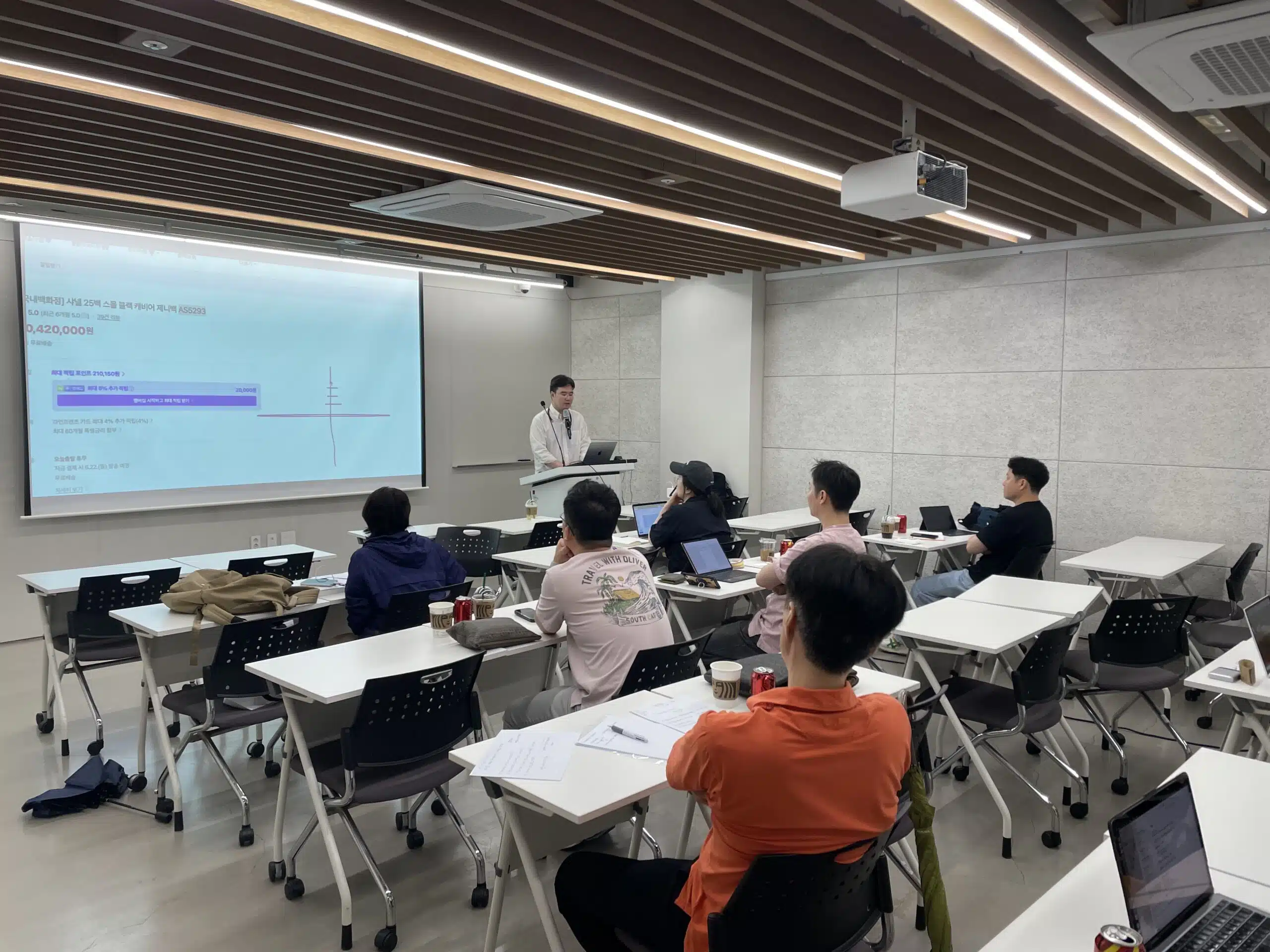
On May 15th, I conducted a global GEO training session at the Korea International Trade Association.
I’ve summarized and am sharing the content that students were most curious about during this training, along with the key messages I emphasized.
“Will my business fail if I don’t do GEO?” This is the most common question I receive.
There’s a question I get asked most frequently at training sessions.
“Is my business at risk if I don’t implement GEO right now?”
I answer this question honestly.
“Who would tell you that your business will falter if you don’t implement GEO right now?
In my opinion, it’s only those involved in related businesses.”
Don’t be swayed by exaggerated marketing.
While GEO has principles and rules, it’s an area built upon a solid SEO foundation.
In this training, I lecture by revealing actual data obtained from real consulting cases.
I’m revealing my website data.
Three years ago, I started my company with no capital, and now I operate a business with five employees. I’ve reached this point with almost no advertising costs, and I directly showed the AI traffic data for my website. The result? AI traffic accounts for less than 5% of total traffic. In the Korean market, traffic from AI is still less than 5% of the total. This is not just my opinion but a common consensus among the consultants I network with.

So why do I emphasize GEO?
Here’s the twist. Traffic is 5%, but the dwell time is more than 7 times longer.
| Traffic Source | Average Dwell Time | Purchase Conversion Potential |
|---|---|---|
| Naver Blog | Approx. 3 min | Normal |
| AI Search Traffic | Approx. 7+ min | Very High |
Users coming through AI search already have a clear purchase intent. This means you can expect a high conversion rate even with less traffic.
AI Traffic by Industry: Data I’ve Personally Verified
This is the proportion of AI traffic by industry that I’ve personally verified through my consulting work.
| Industry | AI Traffic Proportion | Remarks |
|---|---|---|
| Robotics/Manufacturing | 10-30% | Traffic increases with timeliness |
| Healthcare | 10% | |
| Chemicals/Material Processing | 10% | |
| Dentistry/Plastic Surgery | 7% | Patient visits via AI have surged over the past year |
| General Industries | Less than 5% | – |
The effect of AI search is particularly pronounced in B2B industries. I personally confirmed that for one of my clients, a robotics company, up to 40% of their total traffic came from AI.
Why I’m Cited by AI
If you ask AI to “recommend the top 10 Google SEO instructors in Korea,” my name appears. Why would I, a latecomer to the industry with less than 10 years of experience, be listed? Because I’ve done Google SEO well.
“If you rank on Google’s first page, you’ll also be exposed to AI. Statistics show that 67-77% of content is cited directly.”
This is the message I emphasize most in my training. If you do SEO well, GEO naturally follows.
3 Ways to Implement GEO
Here are the methods for implementing GEO that I teach in my training.
1. Google First Page Ranking (The Most Standard Method)
By ranking high on Google through SEO, you’ll automatically be cited by AI. This is currently the most stable and proven method.
2. Improve Indexing Speed Website Optimization
This method optimizes your website to quickly transmit data when AI bots visit. It’s a popular approach in the US, and I’ve invested about 10 million won in its development. Large corporations like Shinhan Bank use it, but the cost is still high for small and medium-sized businesses to adopt.
3. Build Backlinks
When other reputable sites link to yours, the likelihood of AI citation increases. Google’s first patent was precisely related to backlinks.
Strategies Differ by Country
A common question I receive during global marketing lectures is, “Which country should we target?”
From my experience:
- Japan: Although it’s Yahoo Japan, it’s actually Google-based. SEO is GEO.
- USA: SEO, GEO, and SEO+GEO are considered separate areas.
- Southeast Asia: Indonesia has developed IT infrastructure and e-commerce, so there’s demand.
- United Arab Emirates: Funding is strong with oil money, and there’s often talk of a lack of investment opportunities.
There are 239 countries according to UN regulations, and marketing strategies differ for each.
These aspects are covered in detail, case by case, during the training sessions.
What were the positive feedback points from students in this training?
To be honest, I’m not the best in the industry.
However, I have my own strengths.
- Real Data Disclosure: I directly show my website and client data.
- Field Experience: I share insights gained from my work as a practicing consultant.
- Honest Feedback: I tell you when something won’t work. This is because I’ve had experiences paying high fees for SEO consulting that didn’t deliver. ㅜㅜ
Global Marketing Training Consulting Inquiries
If your B2B company needs an SEO/GEO strategy for overseas market entry, please contact us.
Our curriculum is proven and verified by organizations like the Korea International Trade Association, KOTRA, and major corporations.
More Related Articles